
From manual exchanges to a product-led upgrade path.
The MVP already showed what happens when upgrades live in the product: about 13% conversion among people who saw the flow and roughly 0.45% gross revenue lift. We're now rolling that out across Marketplace and Whitelabel so fewer people need support to change tier; the roadmap aims for at least $3M in incremental revenue per year once coverage grows.
Less friction for fans, and revenue we were leaving on the table.
The friction
Fans who wanted to move from General Admission to VIP had to go through User Operations. That meant more support tickets, manual coupon handling, and drop-off while people waited for a representative.
The opportunity
Monetization: Even with limited exposure, upgrades lifted gross revenue in the MVP.
Experience: Strong appetite for “experience enhancement” when the upgrade path is visible and simple.
Operations: Automating the flow targets exchange-related support tickets trending down to a 2% baseline relative to prior volume.
North Star: 1% upgrade rate on eligible plans by Q4.
Success is measured across adoption, revenue, conversion quality, support load, and how widely eligible plans are covered as the rollout expands.
| Metric | Baseline (MVP) | Target |
|---|---|---|
| Upgrade adoption (user) | 0.27% | 1.0% |
| Gross revenue increase | 0.45% | > 0.5% |
| Feature conversion rate | 13% | 20% |
| Support ticket volume (exchanges) | Prior baseline | ~2% of prior baseline |
| Plan coverage | 20 plans | Expanding share of eligible plans globally |
Pay only the price delta, without losing the order.
We designed an integrated flow so users pay only the difference between their current ticket and a higher tier, with guardrails that keep orders coherent and the system stable.
- Eligibility logic: At first, only plans with fewer than 20 sessions per slot and no seating maps (think Candlelight, festivals) so we could ship safely.
- Smart restrictions: Upgrades only go up in price; line items stay coherent so nobody loses a seat mid-flow.
- PRP handling: Purchase Release Protection can follow the new ticket when someone pays the delta.
- Touchpoints: Entry from My Tickets and from post-purchase CRM emails.
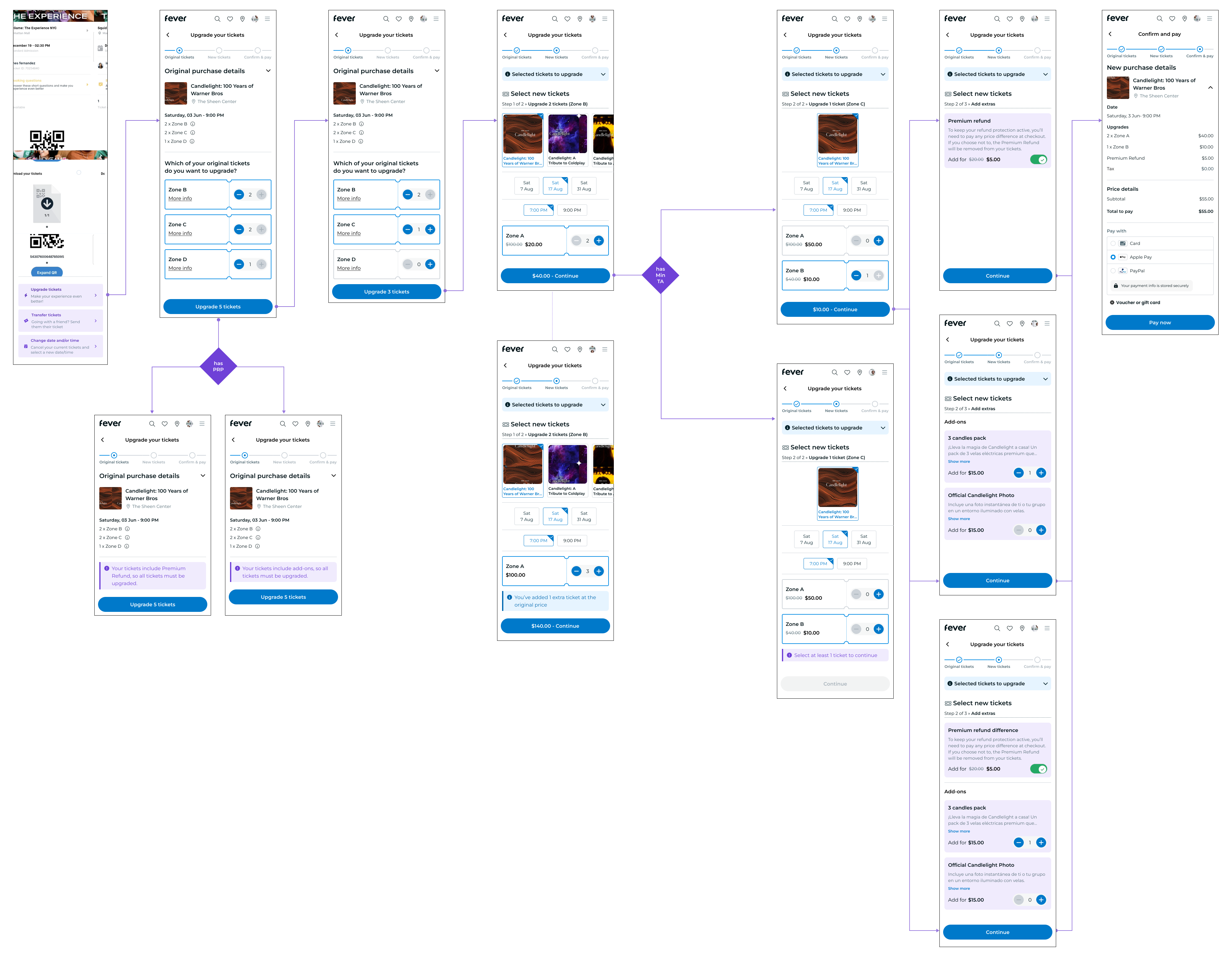
The upgrade journey in the product.
From discovery in My Tickets through tier choice, price delta, and confirmation.
A/B tests on price framing.
Alongside work on My Tickets and post-purchase email, we ran controlled experiments where layout, steps, and eligibility stayed the same but what people saw for money changed.
One path showed full list prices all the way through (tier prices, lines, running totals), then made the net to pay clear at checkout; credit from the original order behaved like a settlement. The other showed only the delta on each step so the extra cost stayed obvious without repeating full face value every time.
We compared step-by-step drop-off, completion, and downstream noise (support, refund confusion) to choose the framing that felt fairest and converted.
Price presentation variants
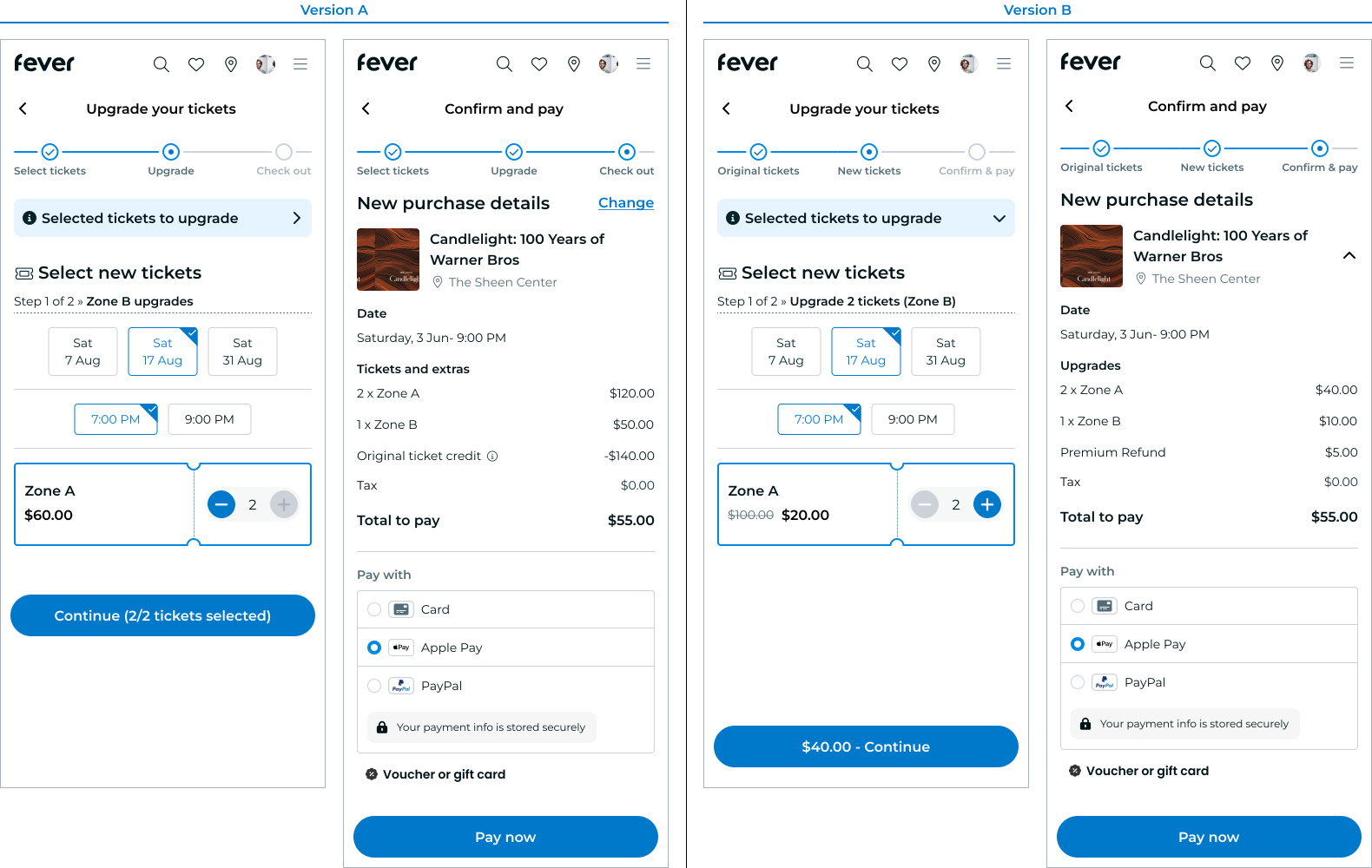
Price framing results
The delta-only funnel (Variant B) beat full list price with settlement at checkout (Variant A): conversion was ~68% higher and abandonment was ~32% lower from first eligible screen through payment. The lift held when we sliced by device and by upgrade size (small vs large delta).
| Signal | Variant B vs A (rounded) |
|---|---|
| Funnel conversion (eligible → paid upgrade) | +68% relative lift |
| Abandonment (started flow, did not pay) | −32% |
| Median time to complete checkout | −14% (faster) |
| Average incremental revenue per completing session | +21% |
50/50 split, ~18k eligible sessions over three weeks on matched plans and locales; uplift significant at 95% confidence on conversion and abandonment.
The delta framing (B) rolled out behind feature flags, with ongoing checks on conversion, abandonment, and support volume.
Phased rollout to manage risk.
Testing on 3–5 plans (Candlelight / SSI).
20–30 Candlelight plans in a single city.
Global availability across all eligible Marketplace plans, once the pilot clears the bar.
Target personas
“Want a better view? Easy upgrade in two clicks.”
“Bought GA, now wants VIP. Still time.”
Seated events and richer protection controls.
Next up: upgrades and rescheduling for plans with real seating maps, and finer-grained PRP so people can split or tweak protection per line during an upgrade.